
Interview with Dr. Ryan Montoya
Family Medicine Physician | Comic Book Artist

Introduction
If prioritizing art is important enough, you should do that before those other things. -Dr. Ryan Montoya
Like horse blinkers, moving through the clinical realm narrows your focus into a well-trodden lane. The further you travel down the academic path, the more doors seem to close on possible lives. Dr. Ryan Montoya (Instagram | Website) is a master of proving that a life balancing many interests exists one cold email away. In this conversation, he talks about practicing medicine across three continents, why restrictions are where creativity lives, and how a single line of ink can carry memories.

Life Rotations
Can you paint a picture of what your life is like as a doctor?
Ryan Montoya: Yeah. I’m a family medicine doctor by training, full-spectrum primary care, family medicine. My focus in residency was opioid and narcotic abuse. I did medical school and residency at the University of Massachusetts, and I practiced direct primary care for a few years before I started traveling around with my wife.
My wife is a diplomat for the State Department, so every few years we move to different locations and I try to find some sort of medical job wherever we are. Sometimes that means working with the U.S. Embassy wherever we’re posted, and sometimes it means finding more local or medical-adjacent work.
What has surprised you most about practicing medicine in different places?
Ryan Montoya: What we’re trained in in the American system, you’ll find some commonalities across medical systems, but then you run into things you may have only read about in medical school or you experience them for the first time.
The other thing is that the American system comes from a position of plenty. We usually have all the resources. We think about the best test to order or the best procedure to order. But when I was practicing in India, there was a completely different approach. You’re resource-strapped and you start thinking about medicine from what you have and what you can do with what you have.
I was working briefly in Bangalore in a volunteer clinic. We went to this small village and there was this shed that basically had some barely expired medications, some minor treatments, multivitamins, things like that. So what I had to do was practice medicine by seeing what we had, and then I’d see these villagers one by one. They’d be holding their medical records in their hand and I’d just do whatever I could with what was there. There was nothing else.
I’m sometimes giving multivitamins to someone with rickets and I know effectively that it’s not going to do much, but it was just what we had at the time. It’s a really different approach to medicine. It’s very humbling. I was honored that they allowed me to treat them, but I also felt humbled just to witness that situation.
Sometimes we forget how much access to resources we have here. Did this flex a bit of your creativity because you have to work with whatever’s in front of you?
Ryan Montoya: I’ve worked in low resource situations in the United States as well, but even then, you’re coming from the approach of this is what needs to be done and how can I get it? Like you said, it kind of forces you to be creative with what you have to do.
Was practicing medicine overseas something you always envisioned for yourself?
Ryan Montoya: I had no idea this would work out okay. I basically did all my schooling in Massachusetts, from elementary school to college. Honestly, if I had not met my wife, I would probably still be there. And that’s not a problem; I’m a bit of a homebody. I really credit my wife with opening up the idea of living outside the United States. It’s one of those things where it’s kind of like having kids where you will never, ever be prepared. If I prepared or steeled myself that I was going to live overseas, it would have never happened. I think I was not well-suited on paper to do this at all, but one of the things that made me suited for it is that I’ve discovered I really like what I call life rotations. Every few years, I know there’s a certain amount of things I can do, a certain amount of things I can experience, and when things get tough, I know it’s only going to be for a few years.
That’s not for everyone. Maybe it helps me avoid dealing with problems. But there is something to be said for always discovering something new. I didn’t know I wanted that in a medical career until I started doing this, but now I do. I’ve never even come close to burnout and I’m very thankful for that.
There’s a a fallacy all of us have in our heads, especially people in medicine where we have to have really good grades and be perfectionists, so you want to set up your art in the same way where I’ll wait until I have the right materials, the perfect space, the perfect space and that’s the death knell for creativity. Don’t let perfection be the enemy of creating something at all. I think medical careers can be similar. We do still have a fair bit of flexibility in our careers to try out things even if we’re not 100 percent sure before we start.
Practicing in Motion
What is your medical work like now in Serbia?
Ryan Montoya: What I love about this environment is the unique situation we’re in. Our previous post was in Moscow, and now we’re in Belgrade, Serbia. What I’m dealing with and what my patients are dealing with, is the way American culture interacts with local Serbian culture.
Belgrade is a wonderful city. People still think of Serbia through the shadow of the Balkan wars or war with Kosovo, but it’s really not like that. Still, the history is there. You still have bombed-out buildings from the nineties and then 2008 with the war in Kosovo. So the way my patients, who are typically the embassy community and their families, interact with the culture locally is fascinating from a logistical standpoint.
The medicine is largely the same, but whether or not someone should get a procedure done locally or whether we should medevac them to a center or whether we should send them back home, there’s a lot of logistical maneuvering for primary care.
One of the biggest challenges is keeping up with all the primary care that is normally routine in the United States. Are you getting your mammograms every so many years? Pap smears with HPV testing? That’s much easier to manage if you live in one place. But all of these folks are traveling back and forth and it’s so easy for primary care to slip through the cracks. So on one hand it is frustrating, but on the other hand it is unique to this lifestyle where you have patients who are following American standards and you need to make sure you are keeping up with them as their primary care provider so that they’re not missing anything.
What’s the upside of that system?
Ryan Montoya: If I’m just doing clinical work and ignoring the administrative work, I can get 45 minutes with a patient. It’s like direct primary care levels and one of its huge advantages. If I go back to a US-based system and someone asks me to see 24 patients a day, I’ll be the worst employee.
I get to spend so much time. I talk with patients and by the time we actually get to what they need to talk about, I feel like we have a shorthand, even if I’m meeting them for the first time. That latitude is a huge advantage.
And the downside?
Ryan Montoya: I’m not unique in getting bummed out by administrative work, especially in primary care. This one is simultaneously more of a burden, but then you can also learn interesting stuff. We had one patient I had to medevac from Russia to the United States after the Russia-Ukraine war had already made direct flights impossible. We had to arrange a private military medevac plane from the Moscow airport to Doha, without Russian government clearance, and then I had to physically hand the patient off to the team there. So yes, it’s annoying because it’s a lot of work, but it’s also kind of interesting because I wouldn’t learn that otherwise. It’s kind of fun; you get to go on these weird planes that only have these straps to put on your arms, essentially a military cargo plane. It was wild. So yes, it’s administrative burden because you fill out all of these forms and write these diplomatic cables, but it’s interesting and my life is devoted now to gathering these stories. That’s more than I can say for when I was doing administrative work in the US and doing prior authorizations.
The First Drawings
What first got you into art?
Ryan Montoya: The first thing that got me drawing was the Ninja Turtles. I remember that my brothers and I watched the cartoon a lot. We would go to this abandoned school across the street from us when we were living in Reseda, California. We’d take these huge pieces of chalk that my grandfather had and draw our favorite Ninja Turtles on the ground. One day we came back and some other kids had drawn Ninja Turtles right beside ours, and to my mind, these kids were the greatest artists I had ever seen in my life. I couldn’t believe how good it was. I wanted to draw as well as they did.
I started obsessing over it and I asked for sketchbooks and my grandfather’s old architect books. My mom would rent these huge volumes of the original comic books from the library. What my mom and I didn’t know was that the original Teenage Mutant Ninja Turtles comics are really violent and very adult; I should not have been reading those. I became obsessed with the comics and my mom saw I was interested and she would bring me comics, including Marvel stuff, The Punisher, also very incredibly violent with a Vietnam war vet with PTSD and he’s blowing people away who were part of the mafia who had killed his family.
The art and the art form had a profound effect on me. I knew really early that whatever happened with art, whatever I drew, I wanted to draw comics for my entire life.
Were your parents supportive?
Ryan Montoya: My parents were exceptionally supportive of me being into art and being an artist. My parents are Filipino, so yes, there’s that stereotype of Asian parents where it’s doctor, lawyer, no time for nonsense. My mom was an art history major and she had done some design work in the past and my sister is also very creative. My parents’ approach was not that they wouldn’t support me, it was that they’d support me the way Asian parents often do, which is okay, what’s the version of getting an A in art?
So, my dad was teaching me things I wouldn’t have known until much later, like how to gather my work into a portfolio. If he didn’t know what ways to proceed in art or illustration, he would go find out by asking people and doing the legwork. I’m very appreciative of that. Their message was basically if you’re going to do this, do it very seriously.
Learning How to Learn
Did you have formal art training?
Ryan Montoya: So I went to high school at Boston Latin and the school of Museum of Fine Arts and Art Institute of Boston, and Mass College of Art were right behind my school. So I got to go to all of these places. I got to go to these classes for free and I’m very thankful, because I got to go to all these fantastic schools right around my high school. If you combine all of these classes I’ve taken, I have a decent foundation. I wouldn’t say I have a full four year art school education, but I’ve taken modeling classes, illustration courses, and built a decent foundation. One of the things I got to do was I took a correspondence course through Joe Kubert’s school of cartooning.1 He’s a very famous comic artists and he and his sons run a school in New Jersey and you can send your comic samples back and forth.
There’s this recurring debate among artists about whether art school is worth it. I understand why some people say it’s a waste of time. It can be enormously expensive and it’s no guarantee of anything, especially now. The promise of you making connections and those helping you further your career are no longer the case. But I will say this: there is nothing that replaces people who know teaching you how to do things and learning the basics and how to learn.
If I need to learn something artistically now, even if I don’t know it yet, I know how to approach it. I know how to break it down. That’s something art school taught me and I don’t know what my art practice would look like now if I had not taken those classes. I’m very thankful for them.
You recently did an art residency in France. What was this experience like?
Ryan Montoya: I did an artist residency in France for three weeks2 with 27 artists working in all different mediums. One of the advantages I remembered from art school, but it was much more concentrated in this artists residency is just walking through and seeing what other people are doing. You start absorbing ideas and approaches that you never would have otherwise. If you take live art classes, it’s not the same as like when we are in medical school where you don’t get anything through osmosis. You’re not inspired to learn pathophysiology that way. But with art, there’s something to be said for being there with other people and just seeing what people are doing and you start integrating naturally what they are doing.
I’m principally a black and white artist, working in monochrome and rendered values. When I went to this residency, I worked with a couple artists who are fantastic at both acrylic and watercolor and they were trying to break color theory for me because I’m like, what is color theory? They were blowing through really complicated concepts and making it much simpler. I didn’t understand a tenth of what they were telling me, but just having those conversations and watching them demo things, gave me permission to play more. I wasn’t mastering watercolor, but I was doing pieces and experimenting.
The Gift of Boundaries
What does your creative practice look like?
Ryan Montoya: I like specific boundaries. One of the things I love about comics is there are very real boundaries. If I’m using a typical comic book page, it’s 11 by 17 inches. You’re restricted by panels and page length. It’s in multiple of four for binding boundaries for typical printers. I’ll preface this by saying that my worst nightmare is walking into the Cheesecake Factory and seeing that menu that’s 40 pages long. I don’t know what the hell to choose. I have paralysis of choice. The waitress comes by and I just order the last thing I read and I hate it.
I’m a happy person when I walk into a restaurant, there are three options for appetizer, entree, dessert; I’m like that’s it. I feel most comfortable with art when there is something I’m trying to accomplish and I have restrictions. The blank page can be terrifying if I don’t have something I want to accomplish. With comics it’s pretty straightforward. I will make comics if I have a story to tell. All a story requires is a beginning, a middle, and an end, and for the definition of comics is at least two panels. Those restrictions allow me the opportunity to figure out creative ways to tell something within those bounds.
Are you someone who likes to keep a sketchbook and scheduled time for art?
Ryan Montoya: I do most of my sketching when I know I have a project and I’m working up and figuring out ideas. But when I don’t and I’m sitting around and trying to let inspiration strike, it just doesn’t happen for me. I just don’t work that way. The other part is process. I try to keep one sketchbook for daily grayscale studies, tiny little illustrations that are very focused for non rendered value. It is part of my routine in the same way that I prepare my kids’ breakfast. If instead I had grander ideas of I want to do work whenever the moment strikes, the moment will never strike for me personally.
Marking Time
How do you define art?
Ryan Montoya: For me, art is how we mark time. I was just talking about this with one of the other residents at this chateau and he had asked me, do I ever revisit old pieces?
I have this one piece from 1999 that I love, but it’s unfinished. He asked would I ever go back now? My answer is no. The most I would do is maybe take it as an inspiration and redraw it now, but I do not want to apply the way I draw now to this piece from 1999 because that is the way I marked time at that point. And I like the idea of even it’s not great work or even like a failed drawing, I like the idea that this is what I’d done at that time. It’s almost like a journal entry.
My sister is a big knitter and into fiber arts and she’s trying to teach me about the process and technical part of knitting, but also the philosophy behind it where tension is really important. If you’re stressed out when you're knitting, you can see the difference in tension. If you are a certain school of knitter, this is a mistake; you tear it apart, start all over again. But there is another school of thought which this is the literal fabric of what you’re making and leaving these ‘mistakes’ shows that it’s human made. It shows that this is what you were going through and is a personal expression of your art as a knitter. I think that’s an interesting idea.3
How do you balance all the different kinds of work?
I used to think there was some magic formula like I’ll apportion this amount of time to this and that, but there aren’t enough hours in the day to do that and also maintain relationships with family and friends. So the way I describe it is I will ramp up and ramp down depending on whatever stage I’m at in my life. For some months, I’ll have a very intense work for an art project and I’ll spend much more time doing that and I’ll ramp down my medical work. My job here and in particular with moving around allows me a lot of flexibility. And then other times when I really need to devote this amount of time to my medical work and practice, I’ll ramp my art down. My only abiding rule is never cut one out completely. I never say I’m going to do art for these years and otherwise for medicine because I once that happens, I I start missing it. I do think they inform each other. The way I practice medicine is informed by my art. The way I make art is informed by the way I practice medicine. It may not be equal measure all the time, but I do try and keep both in my life just in different volumes.
Showing the Work
Who do you show your art to?
Ryan Montoya: I’ll post it online, though my relationship with posting online is formerly estranged. Now I just do it because I feel like I have to advertise my work, show it to family and friends who are just so nice and supportive no matter what.
If I want feedback, there are certain people whom I trust because they give very good feedback about things. The way I see it, my art is often a byproduct of whatever story I’m trying to tell. So they have to work in concert. If the story works, people usually tell me. I will want my story to be engaging and I hope the art complements that. So if it’s a comic about medicine, I’ll share that with other physicians and I know if it works, they’l usually tell me. If they don’t have any comments, I know it doesn’t really resonate.
Do you separate your different identities publicly?
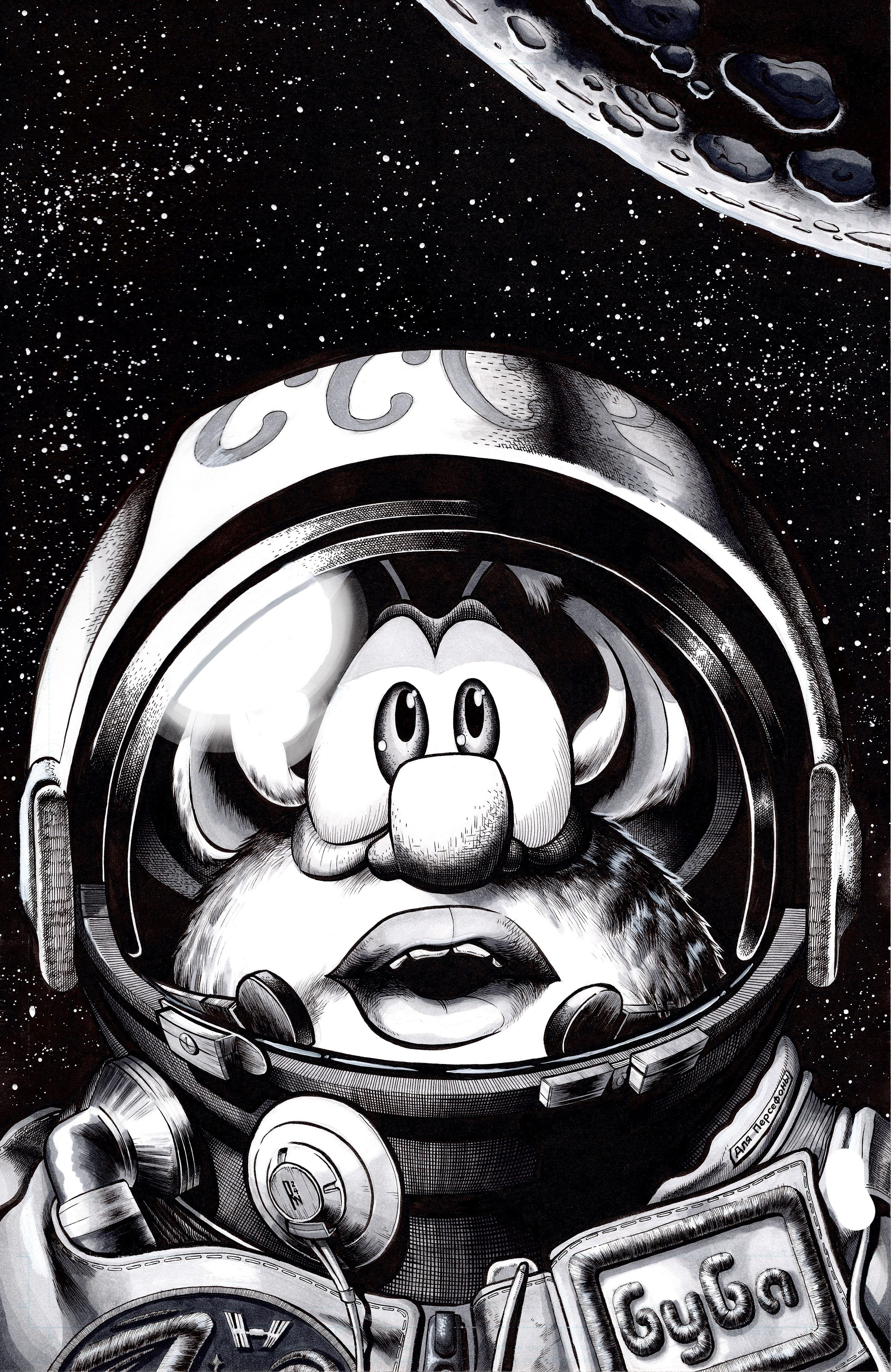
Ryan Montoya: I will tell you what I do and I would say I’m probably the worst person to get advice because I haven’t figured it out. When I want to get consultancy or contract work, I don’t give the whole smorgasbord of what’s my interests and experience, because it will seem on paper like I’m Dante and I’m kind of messing around. I’ve done work like advising biotech or private equity firms and I do not tell them I draw comics and design luggage. It’s just not relevant. But, if it is something where I’m presenting myself as a person, I will tell everyone kind of everything if it comes up in conversation; I found that I really cannot separate the two.
It comes up where we are in Serbia that I practice medicine and so certainly people know me in that regard. We live in this suburban neighborhood and I’ve made this sunroom into a studio where people walking by can see my drafting table with these two lights and they ask what are you doing in there? So it comes up that I’m a comic book artist and illustrator; it could be off-putting to some people because I think humans have a tendency to be comfortable with just knowing what a person is. I felt as a person who never wants to ruffle any feathers, I would just give people an answer that makes them comfortable, but I really like doing a lot of different things. Now I’m older, I’ve become more comfortable with the idea that this is what I really do.
I’d say if you want to grow online and build your social media brand, don’t do what I’m doing because it is a death knell for the algorithm because they want to see the same consistent posts about the same topics. But, as far as living life and being a person, I find that is disingenuous to my personal experience and I kind of just put it all together and give little pieces of it depending on who I’m talking to.
Side Doors
So how did you get into luggage design and with Goyard, no less?
Ryan Montoya: Oh man, this was completely side door. This was another one of those flight of fancy things. When I was in med school, I always loved old things like vintage trunks and luggage; it just checks all those boxes for me. I’m also big into organization and packing. I was aware of Louis Vuitton and a few other brands, but my sister and mom had told me about Goyard. They were like listen, there’s another brand that’s a little more discreet and they’re still a smaller brand. They showed it to me and it was everything. I love that all in one idea: design, beauty, vintage and modern. So I became obsessed with this idea of if I were some rich oil sheik and I had unlimited funds, what would I hire this luxury brand to make for me?
So on my own volition, I would design what I would call the artist trunk. It’d be a small handheld trunk that you could open up and would become a drafting table. Then you would pull out one side and it’d have a portfolio and the other side would have a space for my art materials.
So while I was in residency, I kept sketching what my design would look like. I went through dozens of iterations of this idea. Some were completely impossible to make, others were more practical, but I had no design experience so it was just pure creativity. One day I took a finalized set of designs in a 20 page document and I sent it to Goyard. I said, hey, you don’t know me, but this is an artist trunk I designed. Do you think you could make it?
I sent it on April 1st and I didn’t hear back. I thought they might’ve thought it was an April Fools joke, but I got a handwritten letter a month later from the head of Goyard heads asking who are you? What is your interest in our brand? Is this for a client? I told them it’s not for a client; it’s just for me. I just wanted to know is this possible to make?
I lucked out in a few different ways. First of all, they responded to me. They didn’t have to respond to me, but it’s a small enough brand at the time where they did. The other thing is they had just hired a brand new design head, Eric Blanchi, who was willing and open to new ideas. So he heard about this and the head of Goyard heard about this and they told me we would love to make this as a Halo product. This is a show off piece a company will make and sometimes parts of it will trickle down into other series production pieces. They said they would make it and asked if I would be interested in continuing the design process. I pretended like I had to think about it. They had never hired anyone outside of France.
Rejection Ratios
You mentioned cold emails. It sounds like you’ve made a life out of side doors.
Ryan Montoya: Cold emails are my bread and butter. I have thousands of rejections at this point from all sorts of harebrained schemes. There’s this fantastic essay by Bob Brody in The Guardian called “The Stages of Rejection,”4 and it really spoke to me. It’s called The Stages of Rejection and so similar to the stages of grief5, he talks about his career and how he used to approach rejections. When he was in his twenties, he’s like how could you do this? How could you reject me personally? There’s a conspiracy against me; my work is so good. Now as he’s gotten older and published a lot more, he’s like I’ve come to the acceptance that publishing is an industry with a lot of challenges right now. Editors have to make impossible choices. So he just thinks about it as there’s a certain ration of yeses to nos. And if he can slightly raise the yeses to nos, then he considers that a success. He doesn’t take it quite as personally anymore. I came to this essay relay late, but I felt it really spoke to me. If I’d had this essay years prior, I think I would’ve had a much easier time dealing with rejections. Now it’s a message in a bottle; I send it away and I’ve gotten so many rejections that they just bounce off me. They roll off like butter and when something does come in, it’s like oh this is great. The yeses have been so resoundingly positive in my mind that it all makes it worth it.
That artist residency was a yes. It was like a big yes. You have to be comfortable with the rejections because usually nothing will come of it, but sometimes things come of it anyway in very serendipitous ways.
If There Were No Art
If you didn’t have art, what would your life look like?
Ryan Montoya: Oh my heart. So, I think if I didn’t have a creative outlet like art, I wouldn’t have things to look forward to. I like the ideas of stories or possible pieces boiling in the background. Sometimes I’ll work on a piece of art and the saddest part is when it’s done because it’s not the pursuit of happiness, it’s the happiness of the pursuit. The idea that the process of doing it or thinking about it is really, really exciting. If I didn’t have art, I suppose I’d try to find some outlet to do that, but that is the main way I have this kind of exciting part of my brain that’s activated even when I’m not producing art. It’s just something to get excited about having just finished and something I might do in the future. Art has been such a constant presence; without that I don’t know if I’d pour my time into, but I’d have a very, very different outlook on life.
There’s a fantastic Ted Talk by Ethan Hawke where he talks about the role of an artist. And his definition is one he had stolen from a poet which was the role of the artist is to play a fool. He says his brother was in the military and because Ethan Hawke believes that everyone is an artist, he believe’s his brother’s art was leadership. That’s the way he expressed himself and what he excels at. It takes a lot of creativity to express leadership, but then also to teach that to other people like young cadets. I thought that idea was fascinating and a very expansive definition of art. If I did not have art in my life, and this probably a cheating answer, is we would just find some other outlet to express ourselves.
Lines and Memory
Does medicine and art inform each other?
Ryan Montoya: Certain lines will remind me of certain things I might have studied in med school, a certain experience I had in a hospital when I was training, a patient I had in the clinic. Sometimes it becomes decontextualized when you hear it again in modern times, so each drawing I make is informed by everything I’ve done beforehand and if I make a certain line, it will literally remind me of a certain time in my life.
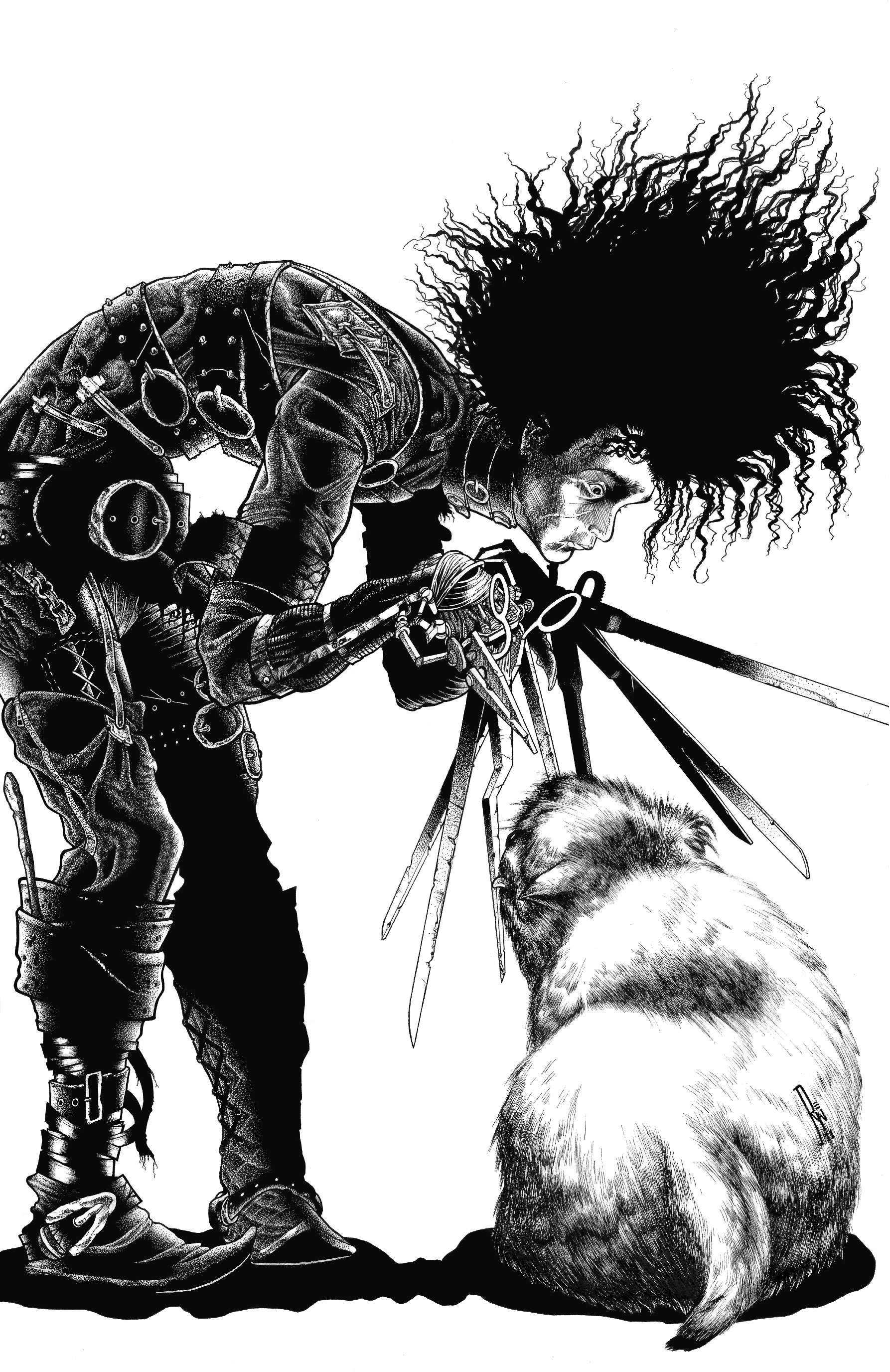
I like to think it’s me kind of transmitting that memory to the page. I did this one drawing of Edward Scissorhands and I used this to propose to my wife. So it’s a very important drawing in that sense. She said yes; it’s her favorite movie. But, while I was drawing this, my mom had been diagnosed with breast cancer. She’s doing fine now, but there are a lot of memories associated with this. There are lines from that drawing that I remember physically making. It was also during the 2011 NBA Finals, the Mavericks versus the Heat; I remember that too. All of these come back to me every so often while I’m drawing. It’s like something in my brain at this point has inextricably linked the two; it’s kind of a way to remember and kind of a way to figure out things in the future.
Then in clinic, I’ll hear a phrase or meet someone who reminds me of a previous patient, and it somehow connects back to drawing. Or vice versa. Something in my brain just links the two now. It’s a way of remembering and sometimes even figuring things out.
What can doctors learn from artists?
Ryan Montoya: Observation. That’s the big one.
One of the exercises we had in art school was to draw a fire hydrant from memory. And the point was that you think you know what a fire hydrant looks like, but you actually don’t. Same with a door jamb, or a desk, or any object you think you understand until you try to draw it.
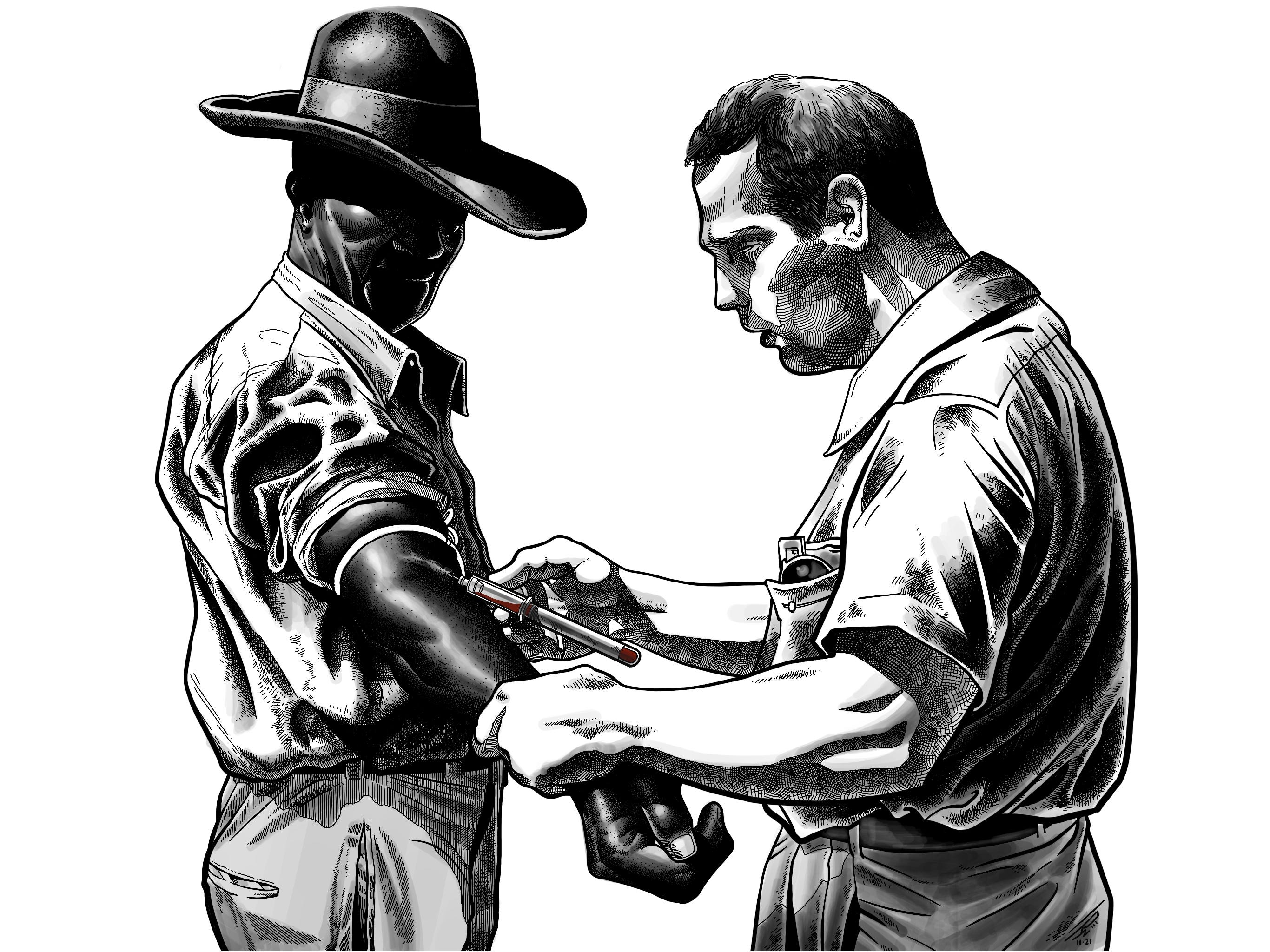
In medicine, observation should be 80 percent of what we do, and yet in practice we often don’t do enough of it. We’re rushed. We’re documenting. We’re trying to make sure everything has an ICD-10 code. We’re not always paying attention to what the patient is actually worried about, which is often expressed nonverbally.
Now that I have more time in clinic, I practice better medicine because I spend almost no time behind a computer screen while I’m with the patient. I’m just talking to them. I document afterward. If medicine in the U.S. allowed more observation, I think it would help everyone involved.
And what can artists learn from medicine?
Ryan Montoya: Treat it like a job.
If you want to write, a lot of writers will tell you the same thing: you sit down, you write from nine to twelve, you have lunch, and you treat it like work. I think art is the same.
When I’m working on a longer art project, that’s exactly what I do. I don’t laze around the house. I don’t work in pajamas. I get dressed. I go into the studio. I work. Then when I’m done, I stop.
Not every artist works that way, but I do think artists can learn a lot from the discipline and organization that medicine demands.
The Prescription
As with many doctor visits, I want to end with a prescription. What would you prescribe to foster creativity for someone in medicine or for a creative healthcare professional?
Ryan Montoya: There’s this apocryphal saying that everyone has 10,000 bad drawings in them. The sooner you get them out, the better an artist you’ll be. I don’t know if that is quite the philosophy I subscribe to, but the basic idea is not to wait for the right opportunity to make art. It will never, ever come and you will never be prepared to do it and don’t try to assign yourself to a particular task if you’re starting out in art because no one’s ever going to be good when they start out. Just do it as quickly as you can and with as little thought as possible, otherwise there are a million reasons and other things you can do. If prioritizing art is important enough, you should do that before those other things.
This is the second time I’m reference this talk, but that same TED talk with Ethan Hawke talks about his mother and she had lived and done a number of administrative jobs in her life, but when she was dying she decided to write a journal about her life. She devoted two paragraphs to her first marriage, a couple pages to all of her jobs and careers, and something around thirty pages to this one summer she had spent working on costume design at a play. It is one of those things; if we are thinking about writing a journal entry, what would we spend most of our time talking about? In medicine we might talk more about patients than any successful diagnoses, right? And then for art, if it’s something you would spend thirty pages talking about, it’s probably something you should be pursuing more seriously.
Note: This conversation has been edited to improve readability while maintaining the integrity of the discussion.
Stay tuned for upcoming conversations of where we gently dissect personal artworks revealing back stories, struggles, and sparks behind the creative lives of healthcare professionals. Join the ArtRx: Prescribe More Art’s Instagram page for more interview clips and connect with the community on Instagram @prescribe.more.art.
Know a healthcare professional who is a visual artist? We would love to connect; reach out with a contact form here or email: hello@prescribemoreart.com.
Bonus story from interview:
Ryan Montoya: I tried knitting a scarf during a particularly tough rotation and my sister gave me this orange thread. I don’t know if was just because I had no technique or I was stressed out, but my attention was so bad. So, I had what looked like little polyps on a cancerous colon. It looked really bad. My sister was trying to be supportive but I do think the idea behind whether to leave it or redo it is interesting.
Super interesting interview!