
Interview with Dr. Marc Murad
Dentist | Multimedia Visual Artist

Redefining Dentistry and Art
Introduction
I’m not an artist in the sense of how we view an artist. I am just someone who loves to ask questions. -Dr. Marc Murad
Dr. Marc Murad, DMD (find him on Instagram at both @marc.murad.dmd and @marc.murad) is a dentist and artist integrating both practices beyond the confines of definitions. I paused over how to describe his visual work, where categories such as oil painter and 3D artist are reductive to his creative philosophy. For him, dentistry is sculpture, art is instinct, and both are paths toward understanding how we arrive at truth. In this conversation, Marc reflects on his evolution as a dentist, his breakthroughs as an artist, and his belief that creativity and instinct are inseparable from being human. What emerges is a searching meditation on what it means to create with honesty, whether in the clinic or the studio.
Professional Life as a Dentist
To start, can you paint a picture of what you do as a dentist? What does your professional time look like?
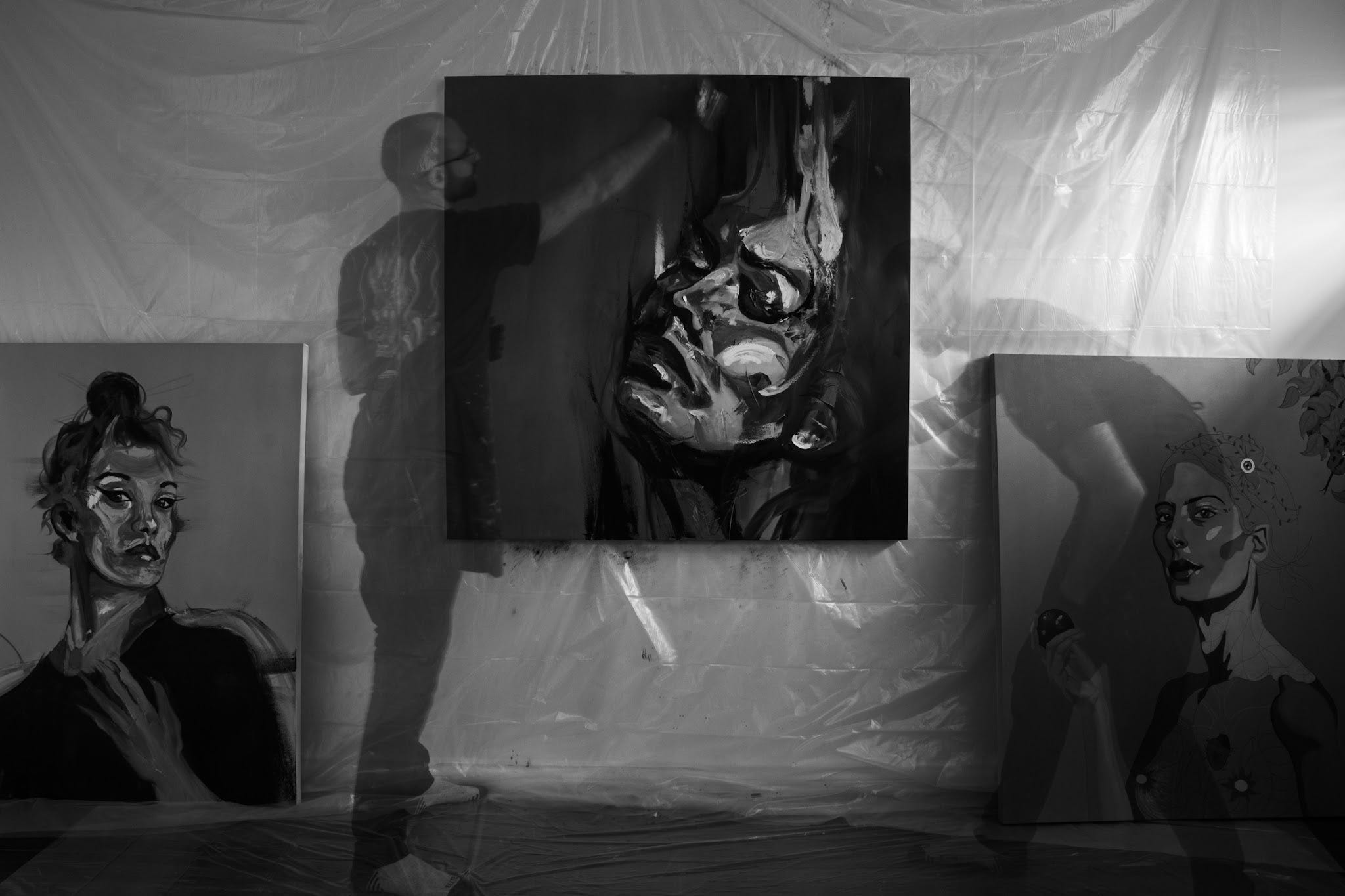
Marc Murad: Right now, I’m not working a lot in clinic since I’ve taken a step back. But usually, I’d have days of general dentistry and I would have days dedicated for surgery and implantology. These were my most enjoyed days. As a dentist, especially in private practice, you can shape the way that you want to work. I am pretty fortunate to be able to shape my practice the way that works for me.
What initially sparked your interest in dentistry?
Marc Murad: To be honest, I had no clue on what I wanted to do. By default, I wanted to go into medicine, but the surgical aspect and working with my hands always came naturally to me. Dentistry was the option that opened for me and I went for it. There was an admissions exam with visual perception tests that made me realize I enjoyed solving visual problems. The essence of restorative dentistry is literally sculpting while taking into account certain conditions and environments.
Do you have family in healthcare?
Marc Murad: Not directly. We have a pretty big family, so far family like cousins are in healthcare, but not my immediate family.
Everyone Is an Artist
How do you define art?
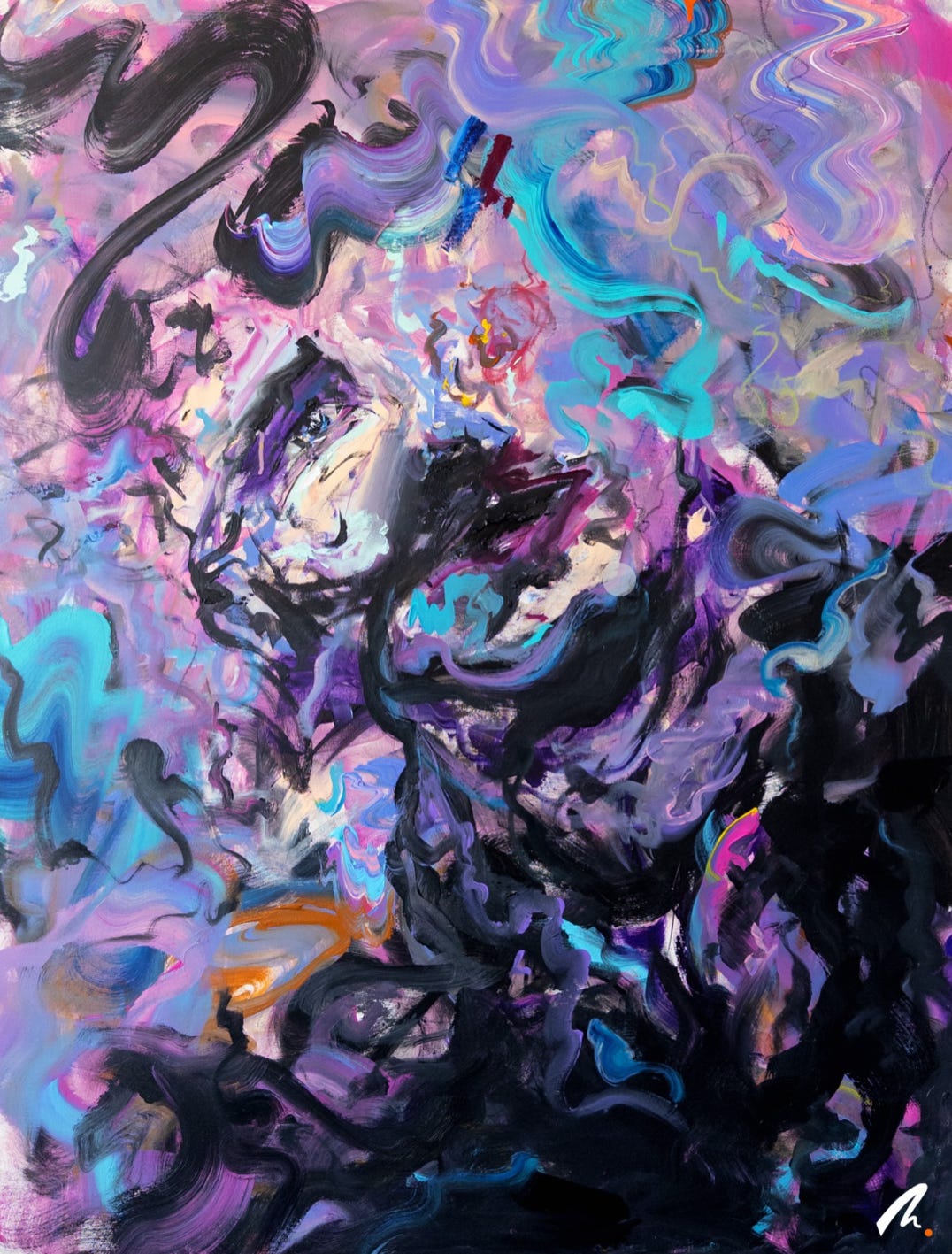
Marc Murad: I’m not sure if definitions go anywhere, but what I know specifically is that everything that humans define as art always have to do with some form of mysterious emergence of outcomes. Even saying these words, I’m not referring to something magical or spiritual, but basically anything that is not mechanical is art. By mechanical, I mean a repeatable, precise path from A to B. Anything that could be done in many ways is art for me. For example, if we think about a thunder strike, it has to go from point A to point B, and even if the origin and ending point is the same, the path there is always different. If you grab a cup off a table, you are not going to take the same path each time. As compared to a machine, the path will be matched each time millimeter by millimeter. As a human, you will never grab it the same way again.
Everyone is an artist, whether they like it or not. They may not see it, but they are performing art every day, every second. Art for me is not just about doing drawings or paintings; the ultimate art has nothing to do with us, rather things that happen through us. That’s how I see art.
Did you have formal training in art?
Marc Murad: I am self-taught, but I took courses over the last 5-6 years. Some courses explained the fundamentals, but they weren’t satisfactory for me.
For example, if you have done a master study and it kind of looks the same, but it still doesn’t sing as profoundly as the original itself. I think the secret of doing art that resonates and moves people is universal and similar to the principle that applies to music or even cooking.
What is your earliest memory of art?
Marc Murad: When I was in room as a kid, I had a nice L-shaped desk that was next to the window with a view of a park. Everything was already perfect before I sat down. I enjoyed making weapons like swords and bows and adding styles or animal designs. I would try to figure out lighting, variations of faces, and create weapons. I would make collections, changing every little element. It was pure instinct or raw design. You would see the next line appear without your consent. This is my ultimate memory of what I call pure art.
Do you see yourself as having a style or signature?
Marc Murad: What we call signature or style or even genre, doesn’t exist. The only thing that exists is the desire for the end goal. For example, you have an infection in your body, say the tooth, that needs to drain. Your body could not encapsulate it and it needs to go somewhere. At some point the infection expands by its nature and creates a fistula whether for the benefit or detriment of the patient. It’s still art, because it happened by itself. The same way that someone needs to express a feeling in the prehistoric times and drew patterns on the wall, then later we as humans love to categorize and call it prehistoric or shamanic art: we come afterwards to glorify and make it something. That’s why I personally don’t believe in genre or style. An artist finds himself, his path of least resistance to express what he has no choice to express inside.
How did you evolve past these categories and boxes; to this point of freedom?
Marc Murad: I was moved to see the deeper things in life. It was my obsession for these past ten years. I wanted to understand the nature of my personal problems. What solved it was seeing the truth of the situation and understanding the nature of the problem.
When I was a kid and would do drawings, I wasn’t trying to fix anything. I wasn’t proficient in understanding anatomy or form, but it was natural result of someone who was whole.
I would do some art exercises with my cousins for fun because I love to see how things turn out. At one point of my life, I would say, “this looks like a child’s drawing,” but now I say it’s magical. The point in my life where I would say this doesn’t look good is because I specifically manufactured the standard and ideal of what is “good.” And this didn’t come from me. It never came from me; I absorbed it from culture, school, art courses, and even museums.
I truly believe that society is the enemy of the artist. Yes, there is a thing of seeing the works of a master or a revolutionary artist, but while his work may inspire you, it is not going to give you the nectar of what he had. We are often focused the result, and in focusing fully on the result, we don’t get there. A plant must start from the seed and there have to be proper conditions to get to the grand sequoia that we marvel at. But we focus on getting to the tree from the beginning. I’m not saying temporal terms, like “be patient, focus on the process,” but cause and effect. Humans are obsessed with how the flower looks. No one looks at a seed and sees the flower already.
Studio Practice
What does your art practice look like day to day?
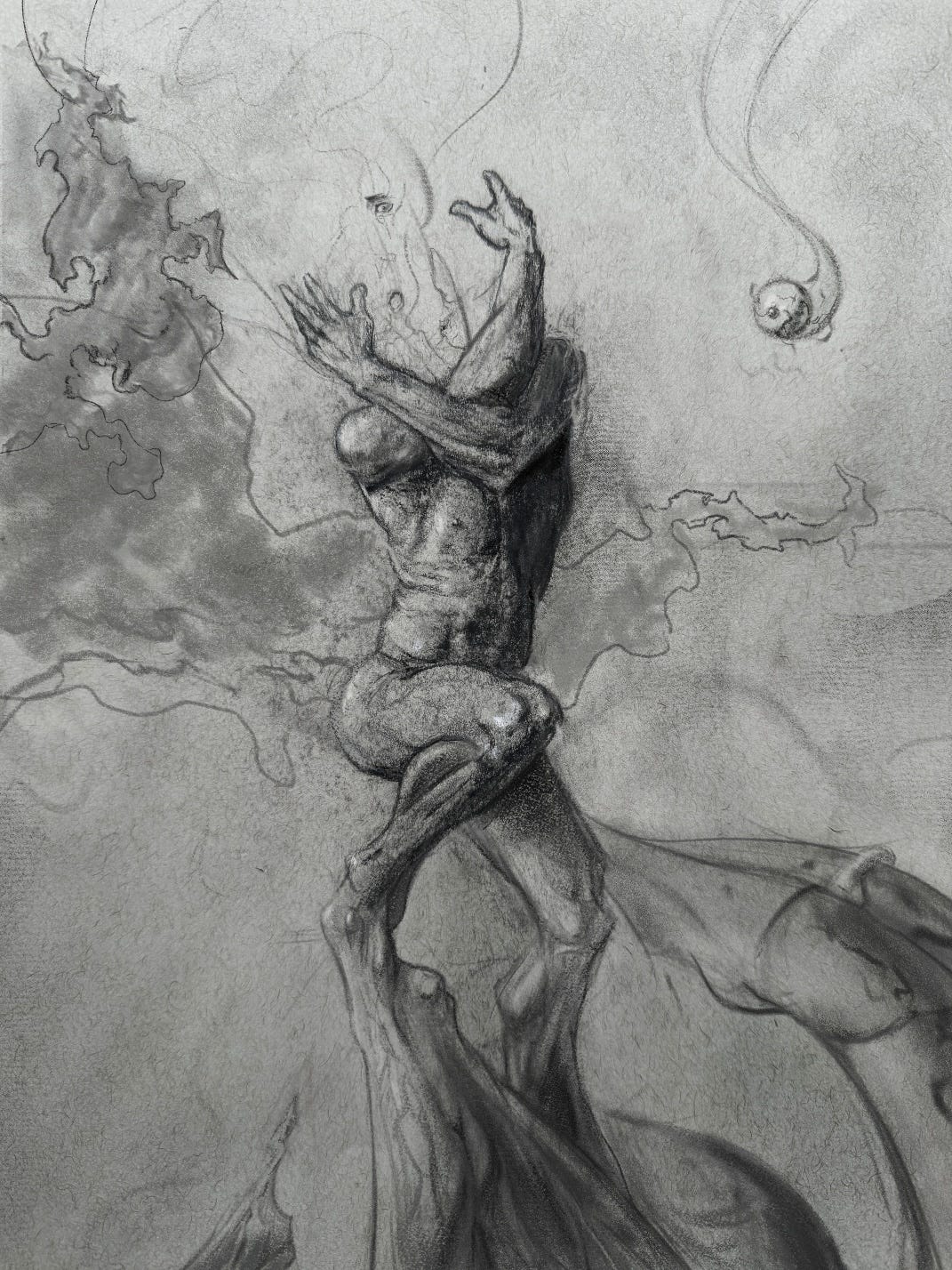
Marc Murad: No schedule, no structure; it’s all experimentation for me. I even took a little break from clinic as an experiment just to see how does the seed grow once you completely change the environment?
Who influenced you artistically?
Marc Murad: My dad had a creative influence on me. He works with metal; a metalsmith. When I was young I would call him a blacksmith. I think I got it from him somehow; even the fact that I would like to draw weapons with design. I didn’t even know what he did at that age until I returned to his home country in Syria and I would look at his incredible artistic stuff. In Mediterranean countries, there are many fences, but they not typically what you imagine in North America. He would create unique gates made of bent and painted metal that looks like a sphinx, or Romeo and Juliet. In our church, he created a St. George fence on the window made of metal. So yes, my only art influence is my dad. He doesn’t really do it any more here in Canada, only in his past life.
Who do you show your art to?
Currently I’m going by instinct. I’m showcasing more without a filter. I enjoy compiling things together and presenting them together in a collection. I enjoy creating multiple things and showing a link between them.
Intersections between Dentistry and Art
You can’t remove instinct from medicine. You can’t remove instinct from dentistry. You cannot remove instinct from painting. That’s what art is; it’s instinct. -Dr. Marc Murad
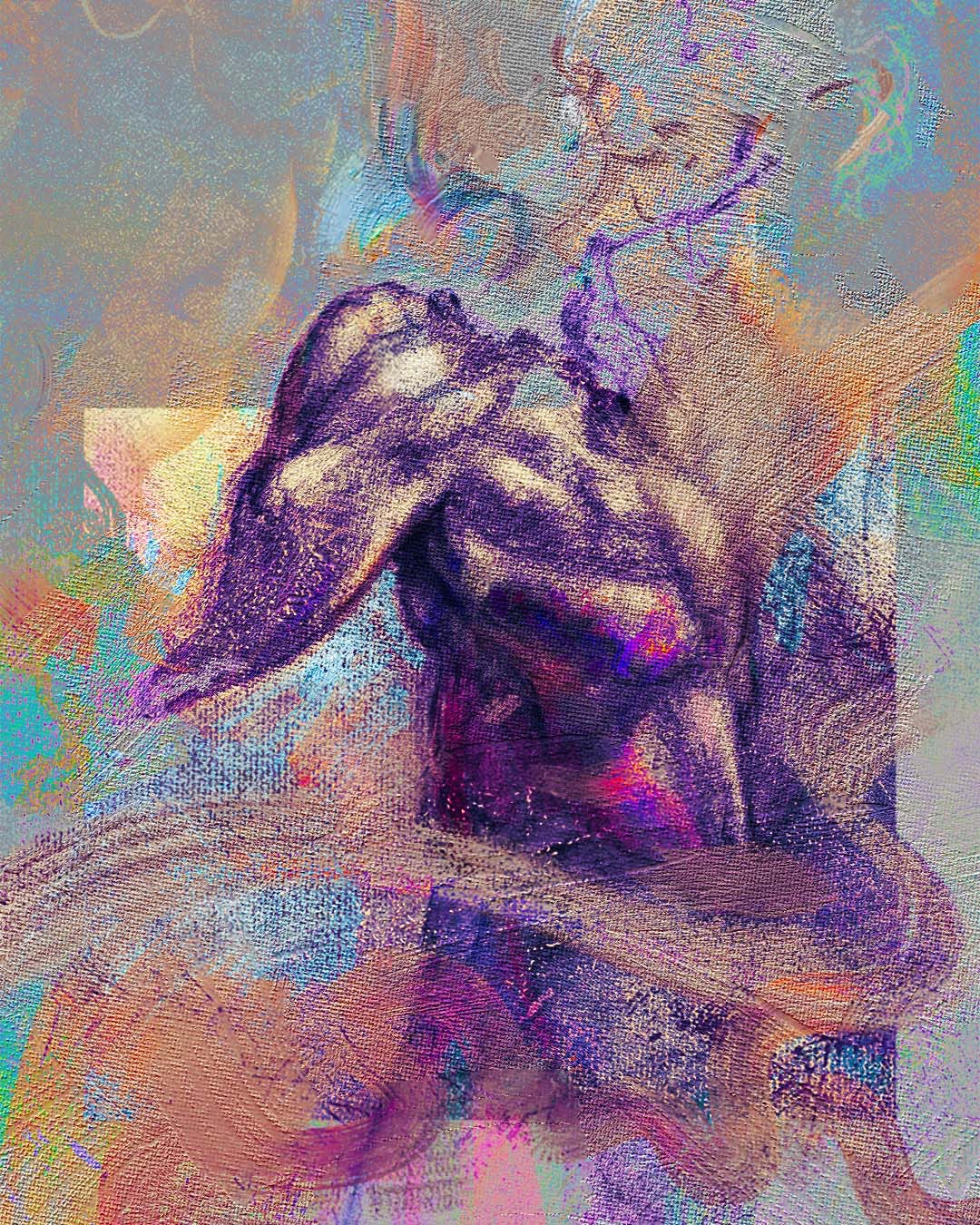
Do you think dentists can learn from artists, and artists from dentistry?
Marc Murad: Absolutely. Understanding art helps you be more delicate with patients. I used to be erratic in my hand movement, but at some point in my dental university, I had a clinician who handled everything with utmost care. He was delicate, even in the way he spoke. It hit me that this was next level. That’s why dentists can benefit from understanding when you leave the hand alone, by itself, becomes perfect. That propels you to the next level. If you try forcefully to be delicate, you will not be delicate. The only real way it will happen is understanding that you don’t need to interfere; it’s all in your hands and eyes. It’s all instinct. If you disappear in the process, you will do a masterful job.
As I became proficient in dentistry, the artist in me learned how to focus on the situation in front of me and not to follow distractions.
Final question: if you had a prescription for creativity, what would it be?
Marc Murad: Become aware of how methods impact and inhibit you as an artist.
Note: This conversation has been edited to improve readability while maintaining the integrity of the discussion.
Stay tuned for upcoming conversations of where we gently dissect personal artworks revealing back stories, struggles, and sparks behind each creation. Join the ArtRx: Prescribe More Art’s project page for more interview clips on Instagram @prescribe.more.art!
Know a healthcare professional who is a visual artist? I’d love to connect; reach out here.